Thesis · 2022
Urban Mining Design
- Type
- Research thesis
- Subtitle
- Pathways to circular and sustainable building design
- Term
- Winter term 2021/22
- University
- RWTH Aachen
- Unit
- Bauplan Teaching and Research Unit
- Master’s project
- Hafentor Münster
The construction industry is the most resource-intensive sector and the largest producer of waste. The thesis examines how the existing building stock can serve as a source of raw materials, and which design decisions enable later separation by material and recycling at equal quality. Its strategies fed directly into the Hafentor design.
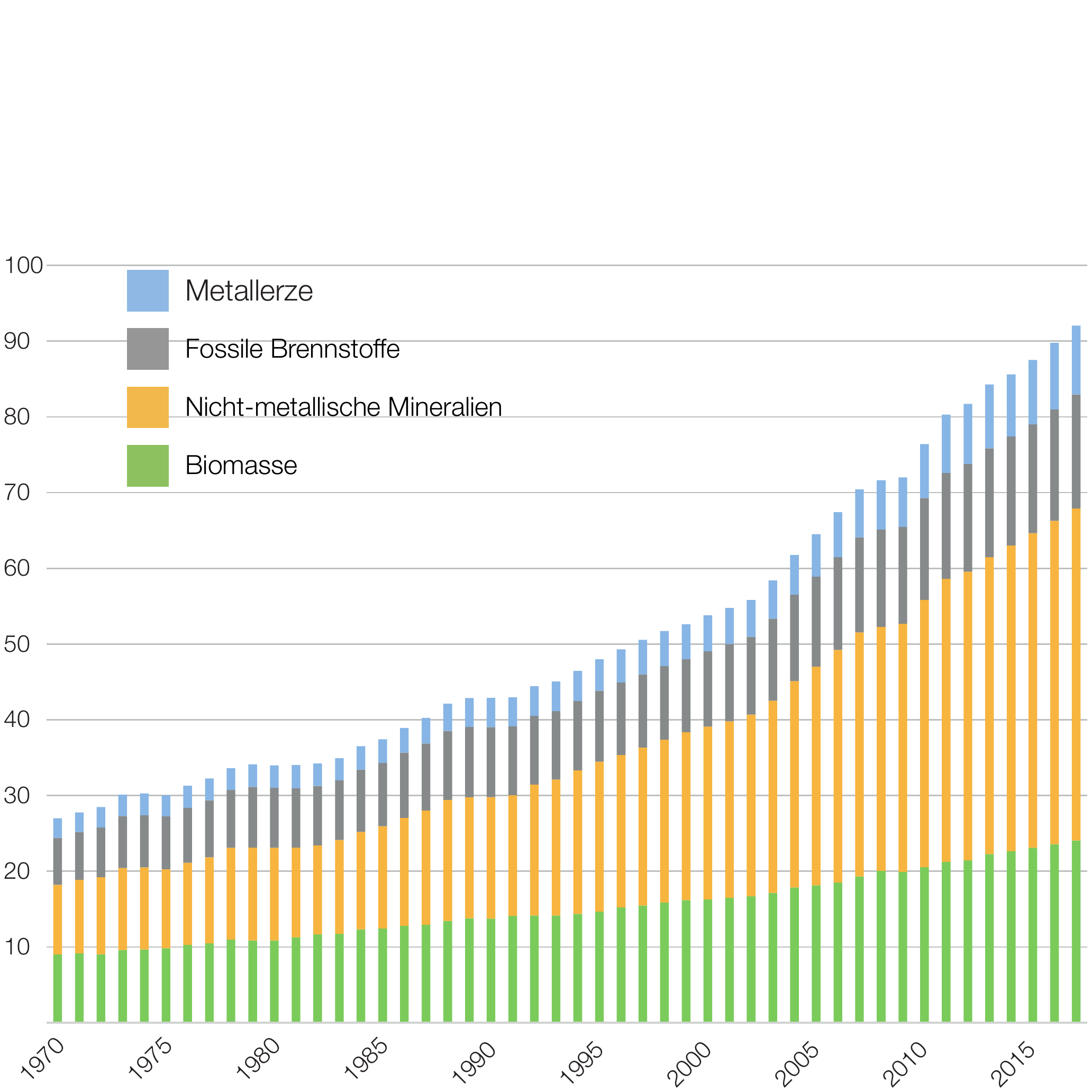
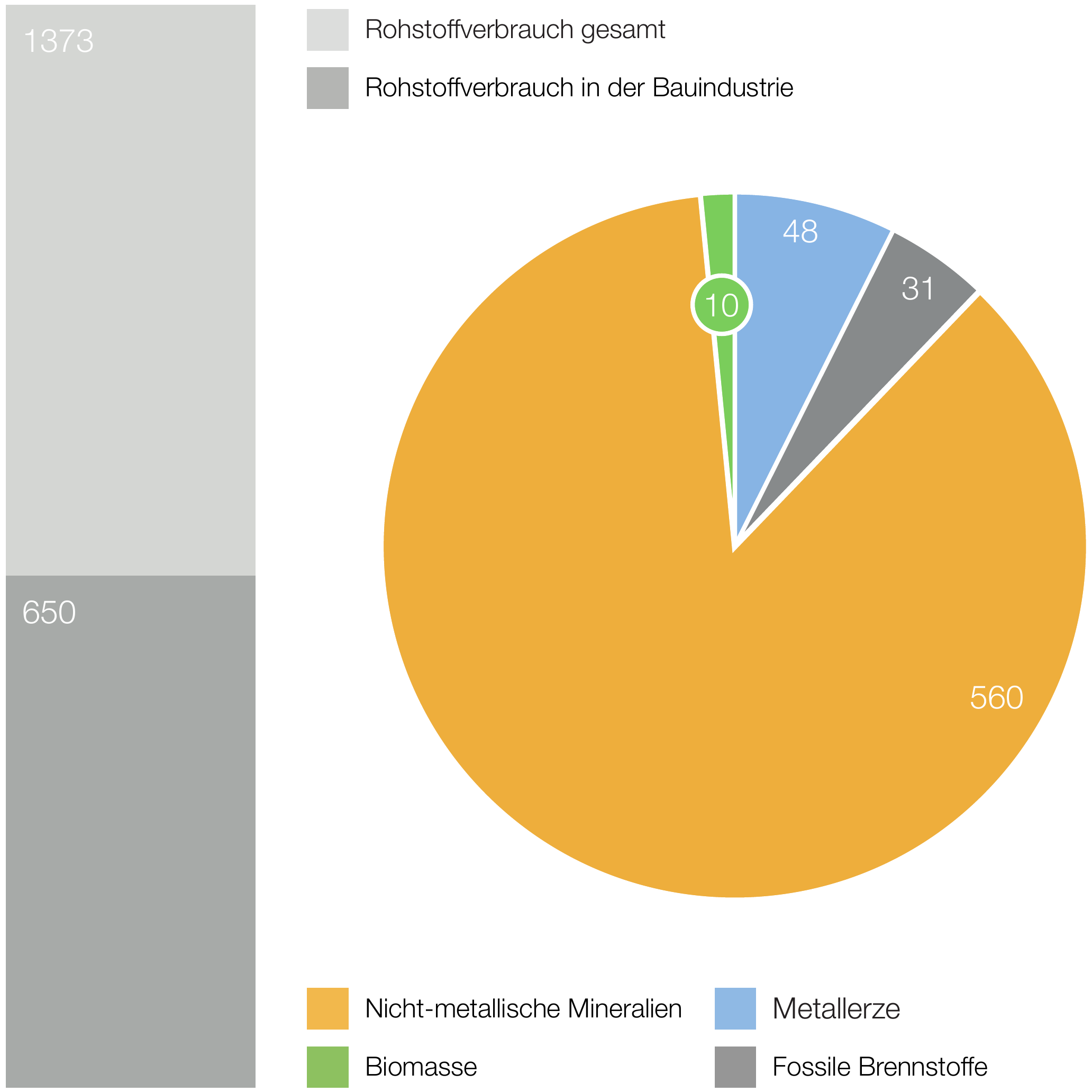
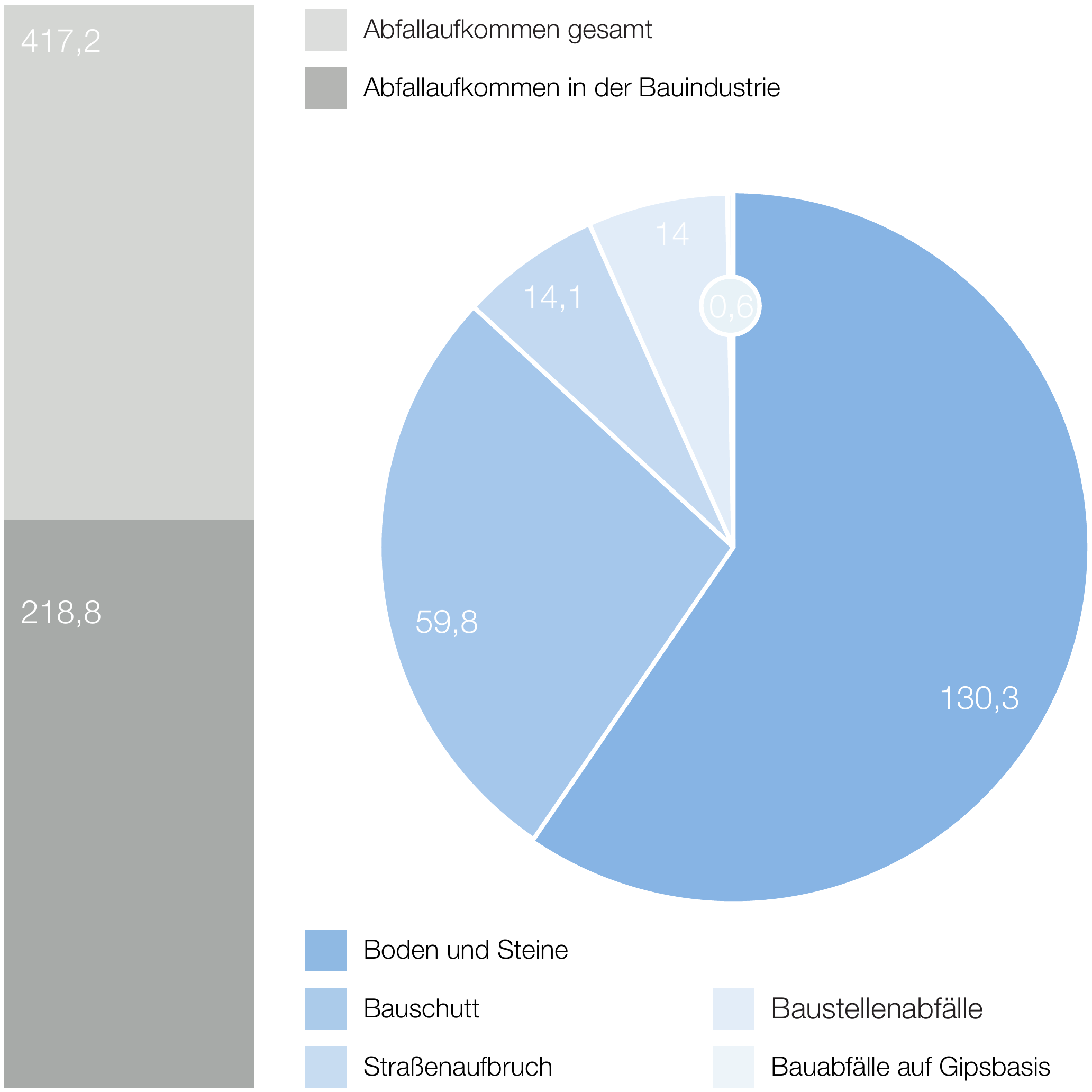
The thesis starts with the numbers: in 2017 the world consumed around 90 billion tonnes of raw materials, more than three times as much as in 1970, and without countermeasures the figure is set to reach 180 billion tonnes by 2050. In Germany, construction accounted in 2018 for 650 of 1,373 million tonnes of raw material consumption and, at 218.8 of 417.2 million tonnes, for the largest share of the waste. Just under 90 per cent of mineral construction waste is recovered, yet mostly as downcycling, in road building or as backfill.
Read more +Show less −
From there the thesis moves through the terms and the legal framework of the circular economy, from technical and biological cycles via the Circular Economy Act (Kreislaufwirtschaftsgesetz) and the Mantelverordnung, the first nationwide rules for mineral substitute building materials, to the resource efficiency programme ProGress. It then introduces urban mining, which regards the city as a stock of raw materials: Germany’s buildings and civil engineering works alone comprised almost 28 billion tonnes of material in 2010. Yet composite materials and permanent joints make separation by material difficult or impossible.
Its core is seven design strategies, from urban planning via massing, structure and building services to joints and materials, digital documentation and costs. Behind them stands the idea that cities and buildings are the raw material suppliers of the future: what can be recovered by material later is already settled at the design stage, for example by clamping instead of gluing, by mono-materials or by easily accessible service lines. The conclusion calls for a new understanding of materials in architecture, from which an aesthetic of its own emerges.